6.2.1 Cities and Fractal Geometry

As shown in the previous chapters, fractal geometry is able to describe complex forms, finding out their underlying order and regularity - self-similarity, simple algorithms -, by reproducing the real world and not by an abstraction into pure mathematics - "clouds are not spheres". Therefore fractal geometry offers a good field for application on cities, moreover, even most of the "planned" cities, using the geometry of Euclid and showing simplicity of form, have been adapted to their context in more natural ways and therefore also contain some "organic" growth and irregularity[01]. Such applications can be the visualization through computer models based on fractal geometry, measuring patterns of real cities and their dynamic simulation by examining city-boundaries, networks, hierarchies, urban texture and the density of population - if cities belong to fractal geometry then elements of these systems will be found on different scales: self-similarity.
Footnotes

[01] Batty and Longley, Fractal Cities (1994), Academic Press Inc., ISBN 0-12-4555-70-5, p. 2.
On the other hand naturally grown cities often display regular parts because of man's triumph over nature - Baroque - or fast growth - turn of the 19th to the 20th century.

eCAADe 2025:
Artificially Interactive Individualized Genetic Algorithms (AIIGA) for Gestalt Analysis

Evolutionary algorithms enhanced with sAI in architectural design
Talk and Proceeding: eCAADe 2025 – Confluence (Ankara, Turkey | conference)

This research is concerned with the automation of the user interventional aspect within interactive genetic algorithms (IGA) as already explored in previous publications by the authors considering their use for Gestalt analyses and generative design optimization. ...

Interview with Wolfgang E. Lorenz

in: DAP / Re:Search_2020.2025
S. 244 - 257, Research Department for Digital Architecture and Planning, TU Wien (Publisher)

Interview with Wolfgang E. Lorenz on research, teaching, and practice, especially over the last 5 years

DGC, Lissabon 2025

4th Digital Geographies Conference 2025

Artificial geographies: opening the black box for a new wave of critical thinking.
Predicting Material Composition of Walls and Floors using Machine Learning...

AlgoPlana 2025

Proceedings of the ALGOPLANA Conference 2025

Research-driven education (“Forschungsgeleitete Lehre“) is common throughout TU Wien, be it in the form of seminars, labs or lectures. ...

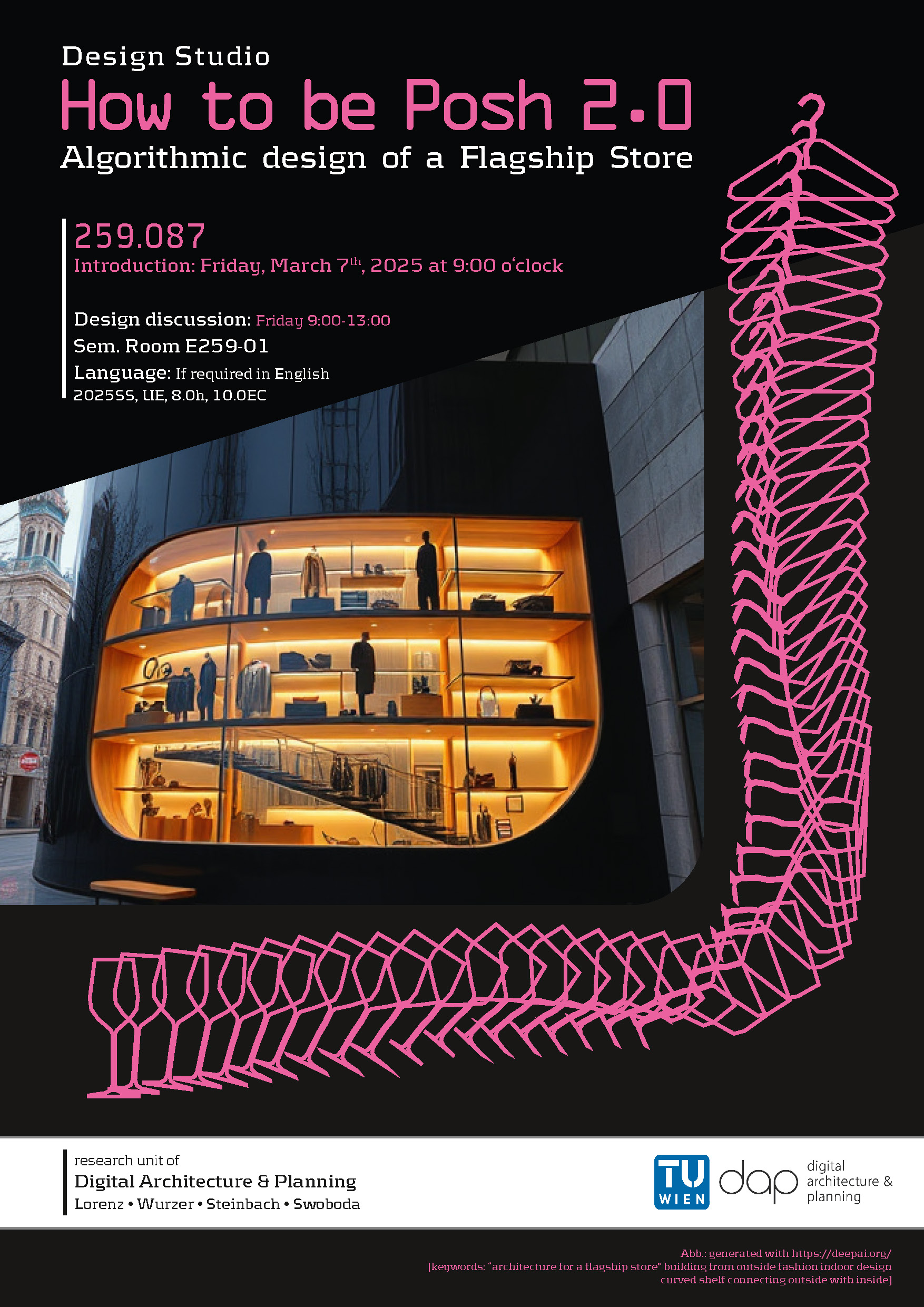
Entwerfen How to be Posh 2.0

Algorithmic design of a Flagship Store

After successful completion of the course, students are able to understand the design process as a problem that can be split into solvable sub-problems. Furthermore, they are able to develop a solution strategy with the help of algorithms. The students acquire

Der Kirchenneubau als Ausdruck religiöser Symbolik zwischen Tradition und Moderne

in: 90 Jahre Pfarre Maria Lourdes (Festzeitschrift)
S. 13 - 16, Pfarrgemeinde Maria Lourdes (Hrsg.)

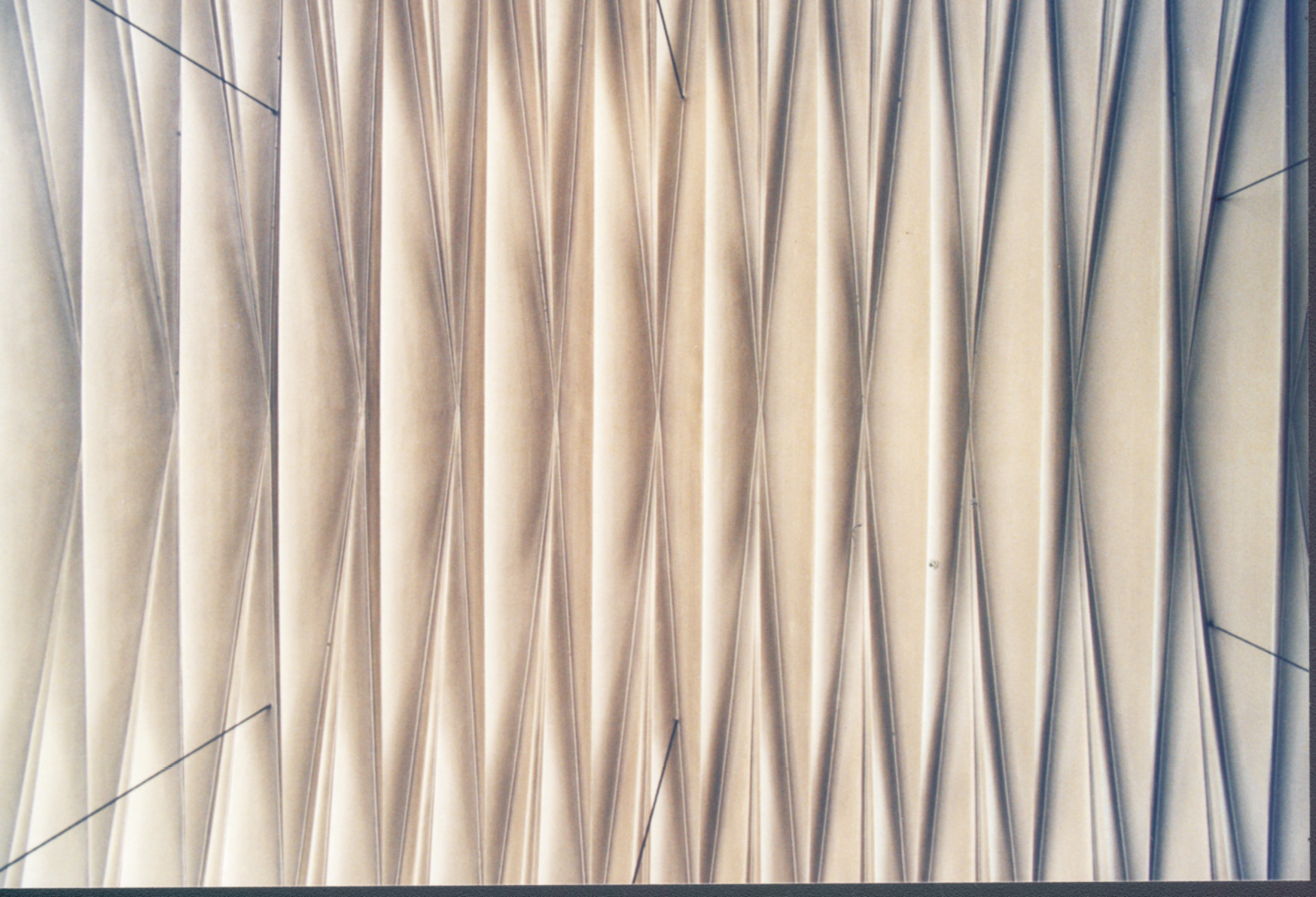
Die Maria Lourdes Kirche steht in der Tradition sakraler Gebäude, interpretiert deren Elemente aber neu. Dadurch erscheint sie als ein Bauwerk seiner Zeit. Sie zeigt neben modernen Umsetzungen von Symbolen, wie der sinnbildhaften Darstellung eines Kirchenjahrs mittels liturgischer Farben,. ...