"Sun Shots"
This project uses three.js. Make your choice and press reset. Or press play button and change settings.
- a source creates point
- the point move away from source
- intersections with ground or buildings are highlighted


This project uses three.js. Make your choice and press reset. Or press play button and change settings.
code
///////////////////////////////////
// ADD BUILDINGS ////////////
/* construct buildings */
var buildings = new THREE.Object3D();
/* building1 */
var mGeometry = new THREE.BoxGeometry( bWidth, bHeight, bDepth );
var mMaterial = new THREE.MeshLambertMaterial( { color: 0xffff00 } );
var building1 = new THREE.Mesh( mGeometry, mMaterial );
/* edges */
var mEdges = new THREE.EdgesGeometry( mGeometry );
var mLine = new THREE.LineSegments( mEdges, new THREE.LineBasicMaterial( { color: 0x0000ff } ) );
building1.add ( mLine );
/* change position */
building1.position.x = - bWidth * 2 ;
building1.position.y = bHeight / 2 ;
building1.position.z = bDepth * 3 ;
buildings.add ( building1 );
///////////////////////////////////
// SHADOWS //////////////////
/* 1. tell the renderer that you want shadows */
renderer.shadowMap.enabled = true;
renderer.shadowMap.type = THREE.PCFSoftShadowMap;
renderer.shadowMapSoft = true;
for (var i = 0; i < buildings.children.length; i++) {
/* 2. enable objects to cast shadows */
buildings.children[i].castShadow = true;
/* 3. enable objects to receive shadows */
buildings.children[i].receiveShadow = true;
}
/* 3. enable objects to receive shadows */
ground.receiveShadow = true;
/* 4. enable a light source to cast shadows (directional or spotlight only) */
light1 = new THREE.PointLight( 0xff0000, 1, 100 );
light1.position.set( sunSphere.position.x, sunSphere.position.y, sunSphere.position.z );
light1.castShadow = true;
scene.add( light1 );
///////////////////////////////////// INTERSECTIONS ///////////
var numPts = sunPoints.children.length;
/* move */
for (var i = 0; i < numPts; i++) {
sunPoints.children[i].translateX ( sunPoints.children[i].userData.direction.x * step )
sunPoints.children[i].translateY ( sunPoints.children[i].userData.direction.y * step )
sunPoints.children[i].translateZ ( sunPoints.children[i].userData.direction.z * step )
if (( getDistance( sunPoints.children[i], sunSphere ) > maxradius ) || ( sunPoints.children[i].position.y > sunSphere.position.y ) || ( sunPoints.children[i].position.y < (-2 * step) )) {
sunPoints.children[i].userData.delete = true;
} else {
var bounding_sp = new THREE.Box3().setFromObject(sunPoints.children[i]);
var ground_bounding = new THREE.Box3().setFromObject(ground);
var intersectGround = ground_bounding.intersectsBox(bounding_sp);
/* intersection of "sun points" with ground */
if ( intersectGround == true ){
sunPoints.children[i].userData.intersects = true;
} else {
/* intersection of "sun points" with buildings */
for (var j = 0; j < buildings.children.length; j++) {
var building_bounding = new THREE.Box3().setFromObject(buildings.children[j]);
var intersectBuilding = building_bounding.intersectsBox(bounding_sp);
if ( intersectBuilding == true ){
sunPoints.children[i].userData.intersects = true;
} else {
sunPoints.children[i].userData.delete = false;
}
}
}
}
}
Gradient Analysis and Box-Counting Applied to Amorphous Designs
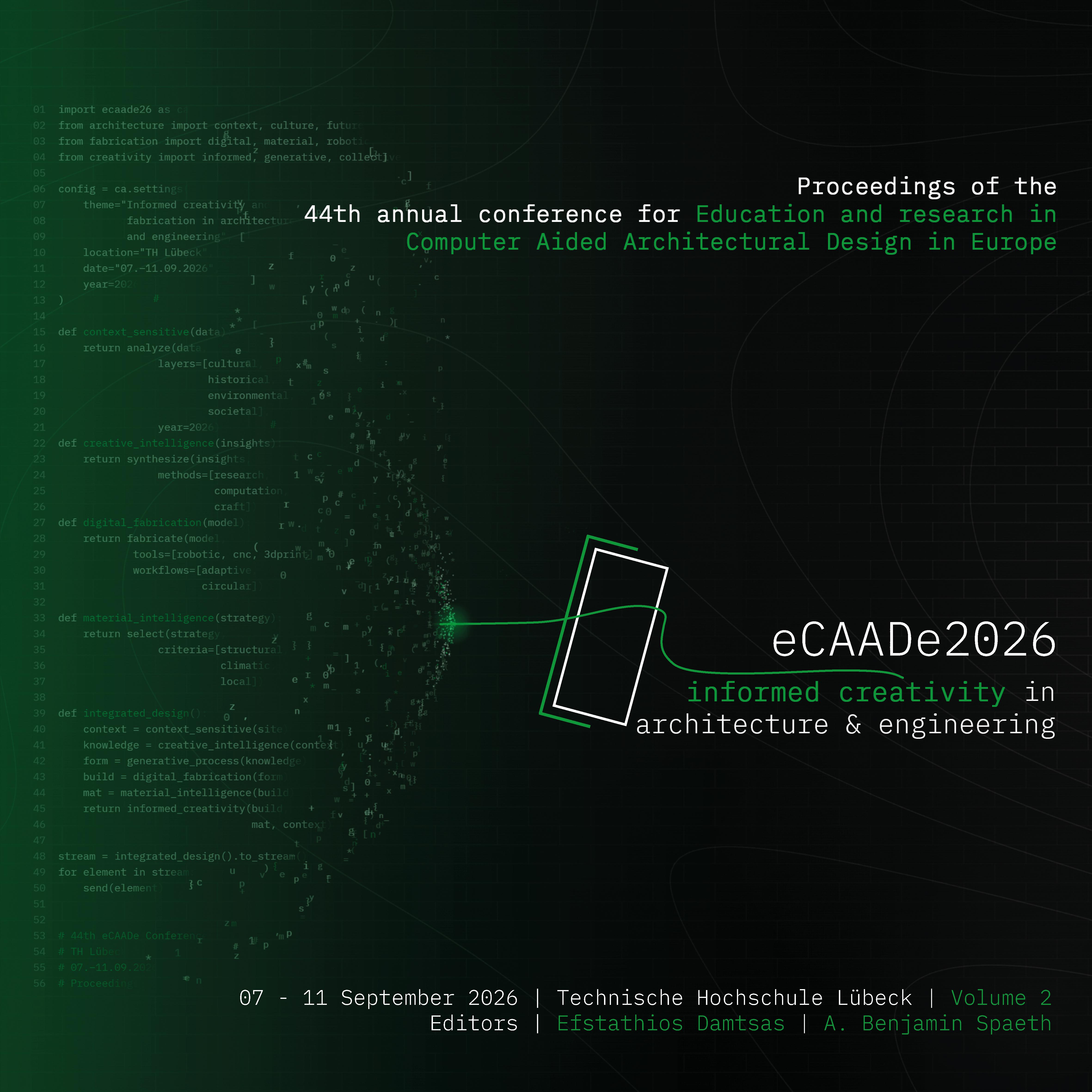
Talk and Proceeding: eCAADe 2026 – Informed creativity in architecture and engineering (Lübeck, Germany | conference)
This paper presents the new and enhanced version of the gradient analysis to be added to the digital toolbox of Gestalt evaluation of irregular shapes. This allows for a multi-perspective approach to Gestalt analysis of irregular shapes in architecture from now on. ...
A web-based application for editing and layout of conference papers
Talk and Proceeding: eCAADe 2026 – Informed creativity in architecture and engineering (Lübeck, Germany | conference)
Writing academic papers is challenging, and formatting them can be even more time-consuming. Over time, the demands for multi-stage submission and review processes have gradually increased. At the same time, the number of submissions and published conference papers has steadily grown. ...
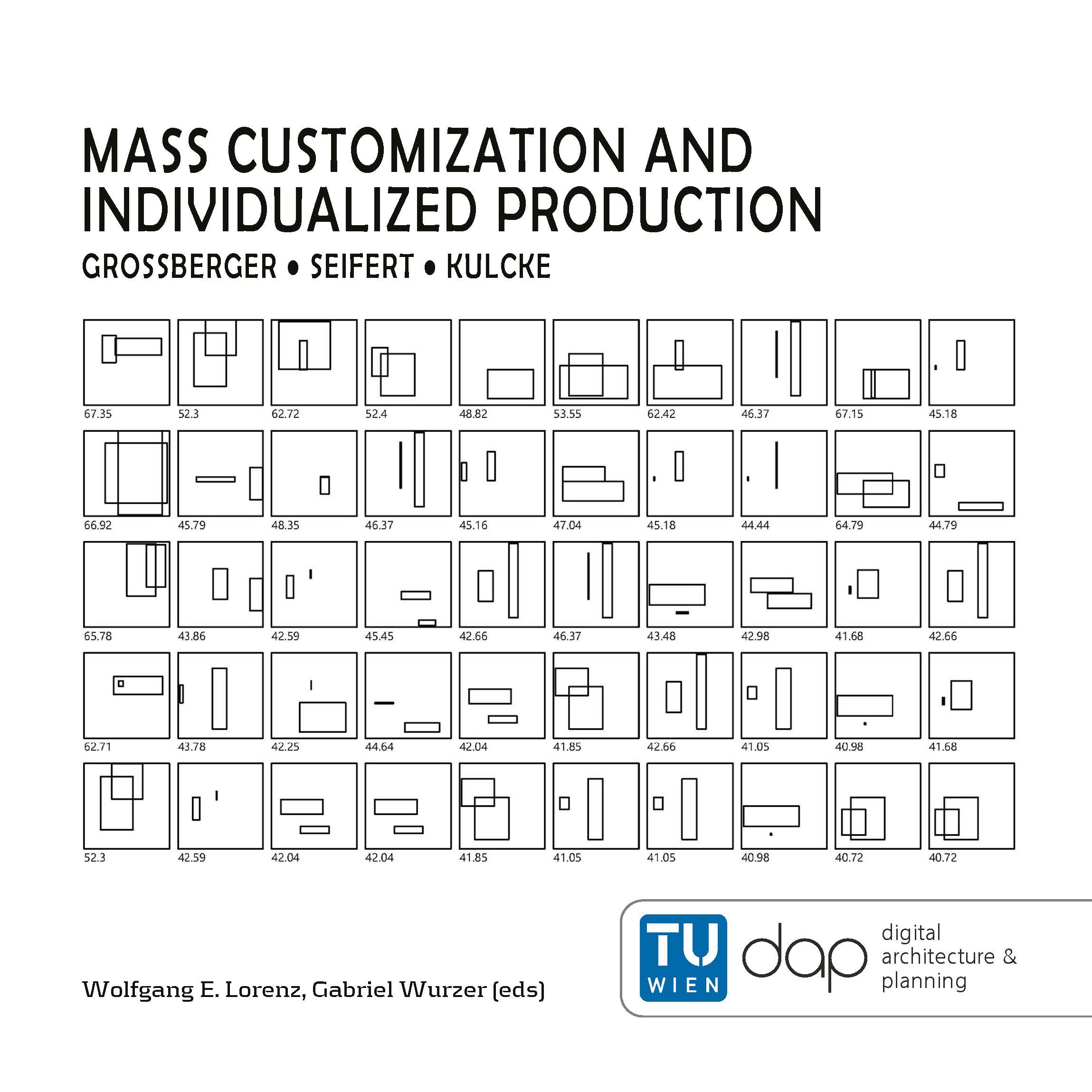
The concept of mass customization has already found its way into architecture. But where does the term come from, what are the basic requirements, and what are the challenges, especially in architecture? ...
Proceedings of the ALGOPLANA Conference 2026
The students‘ conference “Algorithms in Planning Practice 2026” is the result of a seminar held at the Research Unit Digital Architecture and Planning at the TU Wien in the summer semester 2026. ...

Journal Paper In JoDLA – Journal of Digital Landscape Architecture (e-ISSN 2511-624X)
In practice, urban transformation is often carried out at the outskirts or in between existing areas of a city. In that context, important questions are: How can one imagine a transition between different urban structures? ...
Presentation: at the School of Environment and Society, Institute of Science Tokyo, Japan
This presentation explores how municipal data provided by the City of Vienna can be used to support urban analysis, planning, and decision-making. ...